
If you spend long hours on your feet, an anti-fatigue mat can reduce fatigue and soften hard surfaces. This guide highlights five top options for different spaces and needs, helping you pick the right mat based on thickness, material, and in-use versatility. Ideal buyers include home cooks, desk workers, DIY enthusiasts, and people who stand for extended periods in kitchens, offices, or laundry areas. The following table compares key specs to help you decide quickly.
| Product | Thickness | Best For | Material | Notes |
|---|---|---|---|---|
| KitchenClouds Cushioned Rug | Standard thickness | Kitchen and light desk tasks | PVC foam | Water resistant; non-slip bottom |
| FEATOL Anti Fatigue Mat (20″ x 32″) | 9/10 inch | All-day standing | Memory foam | PU leather top; easy wipe |
| StepRite 4/5 Inch Kitchen Mat | 4/5 inch | High-traffic areas | Memory foam | Water and stain resistant |
| ComfiLife Anti Fatigue Floor Mat | 3/4 inch | Standing desk or kitchen | Memory foam | Durable; multi-use |
| FEATOL Industrial Anti Fatigue Mat | 9/10 inch | Garage or workshop | Memory foam | PU leather top; non-slip |
KitchenClouds Cushioned Anti Fatigue Rug — 17.3″x28″
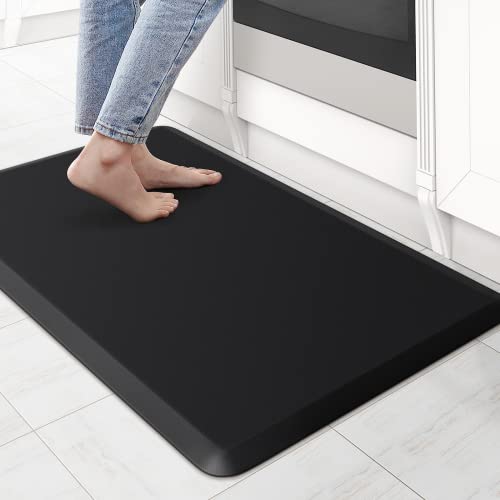
Who it’s best for: Home cooks and people who stand briefly at a sink or counter. The mat offers soft support without occupying too much space. Why selected: The thick PVC foam provides a comfortable cushion, helping relieve pressure on feet and joints during short to moderate standing sessions. The diamond-shaped bottom minimizes slippage, and the beveled edge reduces tripping risk. Limitation: For very heavy use in wet environments, check edge durability over time.
FEATOL 9/10 Inch Thick Anti Fatigue Mat (20″ x 32″)

Who it’s best for: Office workers or home offices where extended standing occurs. Why selected: The mat features a deep 9/10 inch cushion of memory foam for sustained comfort and strong rebound, preserving support over long periods. The PU leather top resists punctures and tears and cleans easily. Caution: High-density memory foam requires occasional flattening if compressed in one area over time.
StepRite 4/5 Inch Thick Kitchen Mat — 17.3″x28″

Who it’s best for: High-traffic kitchens, laundry rooms, or spaces where spills happen often. Why selected: Its 4/5 inch memory foam delivers better support than thinner mats, helping relieve knee and back strain during longer stand times. The surface is water and stain resistant for easy cleaning. Choose this if you need a thicker mat without sacrificing cleaning ease; avoid if you require ultra-large mats for expansive workstations.
ComfiLife Anti Fatigue Floor Mat — 3/4 Inch, 20×32
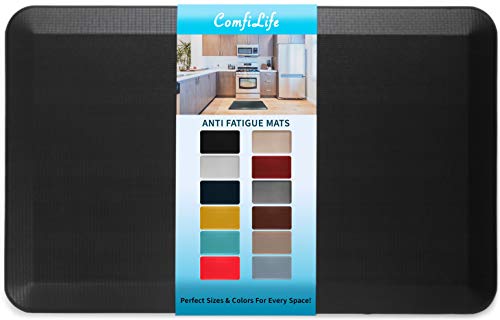
Who it’s best for: Office desks or kitchen counters where standing is routine. Why selected: The 3/4 inch memory foam core provides durable, long-lasting support and reduces foot, knee, and back discomfort. The mat is described as multi-use and well-suited for high-traffic areas. Caution: Some users may prefer a slightly thicker mat for very long standing sessions.
FEATOL Anti Fatigue Mat Industrial — 20″ x 39″

Who it’s best for: Garages, workshops, or kitchen studios where standing is prolonged. Why selected: The mat uses a 9/10 inch high-density memory foam for superior cushioning and ergonomic relief. The PU leather top maintains shape under use and resists punctures, tears, and general wear. Caution: The larger size may require more floor space and careful placement to avoid crowding traffic areas.
Buying Guide
How thick should you choose a mat? Thickness affects comfort and weight distribution. Thicker mats (about 3/4 to 1 inch) offer more cushion for long standing, while thinner mats are lighter and easier to move. Consider your typical standing duration and the surface you’re covering.
What materials matter? Memory foam cores provide the best shock absorption, but can be slower to recover after heavy compression. PVC foam and PU leather tops offer durability and ease of cleaning, with varying resistance to punctures and stains.
What about anti-slip and edge design? Look for non-slip backing and beveled edges to minimize tripping hazards. A textured bottom helps keep the mat in place on slick floors, while beveled edges reduce the risk of catching clothing or feet.
Size and coverage considerations: For kitchens, desks, or laundry areas, measure available floor space to ensure the mat fits without impeding doors or cabinet drawers. For larger workstations, you may prefer longer mats or a two-piece mat set for enhanced coverage.
Maintenance tips: Regular cleaning with a damp cloth or vacuuming helps prevent dust buildup and staining. Some mats are water resistant or waterproof, making spills easier to manage; always check manufacturer care instructions before deep cleaning.
FAQ
- Q: How do I prevent a mat from sliding on tile floors? A: Choose mats with non-slip backing and ensure the surface is dry before placement; consider a mat with a textured underside or an anti-slip grip pad.
- Q: Is a thicker mat better for standing at a standing desk? A: Yes, thicker mats provide more cushioning for prolonged periods, reducing fatigue and pressure on the feet and joints.
- Q: Can these mats be cleaned with water? A: Most mats have water- or stain-resistant surfaces; wipe with a damp cloth or mild cleaner as recommended by the manufacturer. Avoid harsh solvents unless specified.
- Q: Which mat is best for a kitchen with frequent spills? A: Mats with water resistance and easy-clean surfaces, like memory foam cores paired with a water-resistant top, are advantageous for kitchens.
- Q: Should I buy a set of two mats for a larger area? A: If you have a long standing area or two separate work zones, a two-mat setup can provide seamless coverage and consistent comfort.
- Q: Are these mats suitable for garages or workshops? A: Yes, memory foam with a durable top layer is often appropriate for workshops, but ensure the mat is sized for the space and resistant to the expected liquids or debris.