
Answering buyers seeking a reliable angled finish nailer, this guide highlights top options for crown moldings, baseboards, and trim work. Each pick suits different builders, from pros needing lightweight models to DIYers seeking cordless convenience. The following table summarizes five strong options and what makes them stand out.
| Product | Best For | Key Benefit | Limitations |
|---|---|---|---|
| Metabo HPT NT65MA4 | Professional molders and trim installers | Lightweight at 4.2 lbs; angled drive for tight spaces | Requires pneumatic setup |
| 3PLUS HDA1564SP | Budget-conscious pros | Tool-free depth adjustment; anti-double-fire work contact element | May have limited availability in some regions |
| DEWALT DCN660B | Cordless convenience seekers | Battery-powered; no compressor or hoses | Battery runtime varies with work pace |
| Metabo HPT NT65M2S | High-frequency finish work | Pro Preferred designation; versatile 1″–2-1/2″ nails | Bulkier than some compact models |
| SENCO 4G0001N | Finish and trim professionals | Powerful 15 GA pneumatic, oil-free design | Requires compressor and hoses |
Metabo HPT NT65MA4 Angled Finish Nailer

The 15-gauge NT65MA4 is designed for crown molding, base moldings, and interior trim. It accepts nails from 1-1/4″ to 2-1/2″ in an angled configuration, enabling flush driving in tight corners and along crown profiles. Weighing about 4.2 pounds, it balances well for extended sessions, reducing user fatigue during install work. This model suits professionals and serious DIYers who prioritize maneuverability and precise drive depth control. A potential limitation is the need for a compatible air compressor and hose setup, which adds setup considerations for cordless users.
3PLUS HDA1564SP Angled Finish Nailer

The 15-gauge angled nailer from 3PLUS focuses on control and flush fastening. It uses 1-1/4″ to 2-1/2″ nails and features tool-free depth adjustment for precise countersinking. The Work Contact Element helps prevent misfires, and a no-mar tip protects delicate trim surfaces. This model is best for builders who value simple adjustments and reliable performance in varied materials, though it relies on an air supply and may require regular air tool maintenance.
DEWALT DCN660B 20V Max Angled Finish Nailer

This cordless 16-gauge finish nailer eliminates compressors and hoses, powered by a 20V Max battery. Its brushless motor improves runtime and durability, making it well-suited for mobile professionals and small shops. The tool-free selectable trigger supports sequential or contact actuation modes, enabling precise control in varied trim scenarios. A potential drawback is battery life under heavy use, which can require spare packs for longer jobs.
Metabo HPT NT65M2S Finish Nailer

The NT65M2S is a lightweight pneumatic model with a focus on molding and cabinetry work. It supports 16-gauge nails from 1″ up to 2-1/2″. It has a Selective Actuation trigger to switch between bump and sequential firing, aiding control in varied trim tasks. Best for pros who need a dedicated high-volume finish tool without sacrificing precision, though users must manage air supply and oil-free maintenance expectations.
SENCO 4G0001N FinishPro 42XP Angled Finish Nailer
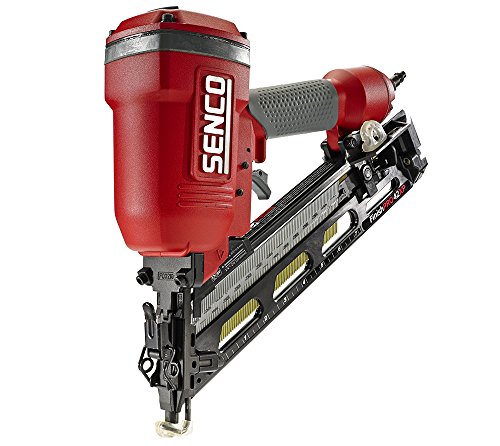
The SENCO 4G0001N is a pneumatic 15-gauge finish nailer designed for trim and finishes with an oil-free design, reducing the risk of residue on work surfaces. It supports standard 15-gauge angled nails and provides depth adjustment for flush finishes. It’s a solid choice for shop settings with a dependable air supply, though it shares the requirement for a compressor and hose with most pneumatic tools.
Buying Guide: Angled Finish Nailer Essentials
- Power source: Pneumatic vs. cordless. Pneumatic nailers deliver consistent power but need an air compressor. Cordless options offer mobility but depend on battery life and charge cycles.
- Nail size compatibility: Most angled finish nails span 1-1/4″ to 2-1/2″. Check your typical trim thickness and framework to ensure correct length and gauge.
- Weight and balance: Lighter tools reduce fatigue on long install days, especially in molding and crown work.
- Depth adjustment: Tool-free adjustments help achieve flush or slightly countersunk nails for a clean finish without dimpling the surface.
- Firing mode: Sequential vs. bump/angle actuation. Sequential is safer for precise placements; bump can speed up repetitive tasks when controlled.
- No-mar tips and surface protection: Important for delicate finishes; many models offer protective tips to minimize marring.
- Maintenance: Oil-free designs reduce cleanup, but regular checks of seals and o-rings extend tool life in pneumatic models.
Frequently Asked Questions
- What is an angled finish nailer best used for?
– Angled finish nailers are ideal for molding, crown work, baseboards, and tight corners where a straight-nose nailer cannot reach. - Cordless or pneumatic—which is easier for beginners?
– Pneumatic tools are simpler for continuous work in a shop, while cordless models offer mobility for spots without air access. - What gauge nails do angled finish nailers typically use?
– Most use 15-gauge nails, with lengths from 1-1/4″ to 2-1/2″ being common for trim and molding. - Why might depth adjustment matter?
– Proper depth ensures nails sit flush or slightly below the surface, preventing nail heads from minging through finished surfaces. - Are no-mar tips essential?
– Yes, for protecting delicate trim surfaces and maintaining a pristine finish during installation. - What maintenance should I perform on pneumatic nailers?
– Regularly check fittings, keep nails clean, and follow the manufacturer’s oiling schedule to avoid jams and wear.