
When you need to convert 6V power to 12V for devices or projects, choosing a reliable converter or inverter is essential. This guide highlights five top options from trusted brands, each offering solid efficiency, protection features, and practical form factors for automotive, hobby, and small electronics use. Below you’ll find concise product overviews, a quick summary, and a buyer’s guide to help compare features like input range, output stability, and protection schemes.
| Product | Brand | Key Benefit |
|---|---|---|
| BESTEK Power Inverter DC 12V to AC 110V | BESTEK | Car-ready 300W continuous, dual USB, 110V outlets |
| DROK 12V to 6V Step Down Converter Waterproof | DROK | Rugged waterproof buck converter for 12V systems |
| DROK 12V-32V to 6V Buck Converter 3A | DROK | High-efficiency buck with built-in protection |
| Wolfwhoop PW-D 6-24V to 5V Buck Converter | Wolfwhoop | Ultra-compact 5V output for small electronics |
| YAXIGE 12V-24V to 6V Buck Converter | YAXIGE | High efficiency with robust protection |
Note: The products listed below are selected for relevance to converting 6V or a higher DC input to 6V or 5V output, suitable for powering low-voltage electronics from various DC sources. All sections include a direct link to the respective Amazon product page for quick access.
BESTEK Power Inverter DC 12V to AC 110V
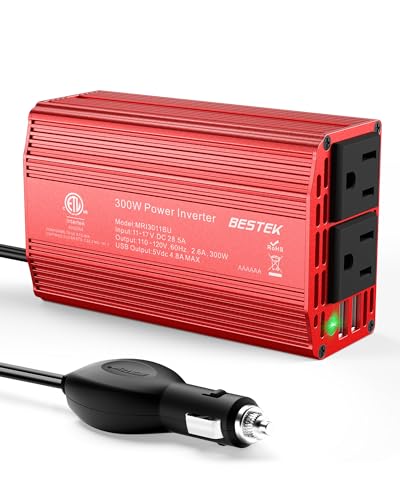
The BESTEK inverter converts 12V DC from a vehicle or similar DC source into 110V AC, delivering 300W continuous power with up to 700W peak. It includes dual 110V outlets and USB charging ports, enabling use of laptops, tablets, and other USB-powered devices on trips or in remote locations. The aluminum housing supports durability in mobile settings. While not a direct 6V-to-12V step-down device, it serves scenarios where 12V systems must power standard AC devices and recharge USB-powered gear.
Key considerations
- Power rating and peak surge capacity for devices
- Outlets and USB port configurations for compatibility
- Thermal management and rugged build for mobile use
DROK 12V to 6V Waterproof Buck Converter

This waterproof DC-DC buck converter plays in 12V-to-6V territory with robust sealing for harsh environments. It emphasizes low ripple, high efficiency, and reliable operation in automotive or outdoor projects where exposure to moisture or dust is a concern. Suitable for powering 6V devices from a 12V supply in boats, RVs, or off-grid setups, the module emphasizes durability and consistent performance even in challenging conditions.
Key considerations
- Waterproof and dustproof ratings for outdoor or marine use
- Input-output voltage differential and current capacity
- Protection features like short circuit and overload protection
DC-DC 12V-32V to 6V Buck Converter 3A

This high-efficiency buck converter accepts a broad input range (up to 32V) and steps down to a fixed 6V output at up to 3A, delivering up to 18W. The device uses synchronous rectification to maximize efficiency, with integrated protections for overcurrent, short circuit, overheating, and more. Its compact aluminum shell supports easy mounting in tight spaces for automotive or industrial projects that require stable 6V output from a higher-voltage source.
Key considerations
- Input voltage range compatibility with your source
- Output current rating and voltage stability
- Protection suite and heat dissipation design
Wolfwhoop PW-D 6-24V to 5V Buck Converter

The Wolfwhoop PW-D module family provides a compact 6-24V in to 5V out conversion with a small form factor you can place in tight spaces. With multiple units (4-pack) in some listings, these buck converters are designed for projects needing a stable 5V supply from a higher voltage battery or vehicle system. The ultra-miniaturized design makes them suitable for microcontroller projects, USB dosing, or small electronics that require reliable 5V power from a 6–24V source.
Key considerations
- Output voltage tolerance and ripple
- Current capability per unit and any parallel usage options
- Thermal performance and mounting considerations
Diitao Buck Converter 12V to 6V 3A

The Diitao 3A buck converter handles 9-22V input and reduces to 6V at up to 3A (18W). It sports an aluminum alloy shell for durability, compact size for space-constrained installations, and multiple protective features including overheat and overcurrent protections, and short-circuit protection. The device emphasizes reliable operation with good heat dissipation and waterproofing characteristics in its sealed housing, making it suitable for automotive or marine applications where a 6V rail is needed from a higher-voltage source.
Key considerations
- Input voltage range suitability for your source
- Current needs and thermal management
- Protection features and environmental durability
Buying Guide: Key Purchase Considerations And Comparisons
When selecting a 6V-to-12V solution, consider the following perspectives to ensure you get the right tool for the job:
- Output requirements: Determine whether you need 6V or a lower/higher fixed output (5V, 6V, etc.), and the maximum continuous current your load requires. This informs whether you should pick a 3A, 5A, or higher-rated device.
- Input range compatibility: Match the input voltage range with your source, such as 9–22V or 12–32V, to ensure the converter operates efficiently without hitting protection cutoffs.
- Efficiency and heat: Buck converters with synchronous rectification typically offer higher efficiency. If the device will operate in a hot environment or for long durations, consider models with robust heat dissipation and protection mechanisms.
- Protection features: Overcurrent, short-circuit, overheating, and reverse polarity protection are crucial for automotive or portable applications. Check the level and reliability of these protections in real-world conditions.
- Environmental durability: For outdoor or marine use, waterproof or dustproof ratings and rugged housings can extend service life and reduce maintenance.
- Size and installation: Compact form factors help in tight spaces. Look at mounting options, pin configurations, and whether multiple units can be combined if higher current is needed.
- Use case clarity: If you need to power microcontrollers, sensors, or USB devices, a 5V output may be more appropriate. For powering motors or higher-current loads from a 12V system, a robust 6V regulator with sufficient current is essential.
- Warranty and support: Brand reputation and documentation help you troubleshoot installation issues and ensure compatibility with your project.
In summary, the right 6V-to-12V solution depends on your source voltage, the desired output, and the environment in which the device will operate. For automotive and portable electronics, high-efficiency buck converters with solid protections are typically preferred, while for off-grid or vehicle-to-AC conversions, dedicated inverters offer more versatile power delivery, albeit with different regulatory and safety considerations.