
Clear, practical guidance for buyers seeking compact digging power without the extra bulk. This guide focuses on 1–2 ton mini excavators that excel in tight spaces, landscaping, trenching, and light-duty construction. The top picks are selected for ease of use, reliable fuel systems, and adaptable attachments. Best for homeowners, small contractors, and hobbyists who need maneuverable machines that fit through gates or indoor spaces. The following table summarizes the five chosen models to help you compare at a glance.
| Product | Engine/Power | Capabilities | Best For |
|---|---|---|---|
| DigSwift 2.2 Ton | 16.5 HP Kubota diesel | Pilot controls, track extension, side swing | Compact sites, trenching |
| MMS15 1.5 Ton | 13.5 HP GAS (Rato) | Side swing, hydraulic thumb, flexible attachments | Backyard landscaping, tight spaces |
| MMS 1.7 Ton | 23 HP RATO | Side swing, deeper digging, ready for work | Tight spaces with more depth |
| MACHPRO 4000lb | Kubota 12.3 HP diesel | True 2-ton class, full hydraulic pilot | Contractor-level small jobs |
| DigSwift DS-16 1.4 Ton | 11.4 HP Kubota twin-cylinder | Pilot control, multiple attachments | Household tasks, precise digging |
DigSwift Heavy-Duty 2.2 Ton Mini Excavator

The DigSwift 2.2 Ton model features a 16.5 HP Kubota diesel engine and pilot controls, designed for maneuverability in confined work zones. It includes a track extension and a side swing boom to access tight angles without repositioning the machine. This is best for small-scale trenching, landscaping, and light construction where space is at a premium.
Best for: small contractors or homeowners who need reliable power in narrow lots and easy control in challenging layouts.
Limitation: data emphasizes simplicity and transport handling; it may lack some advanced diagnostics found on larger units.
MMS15 1.5 Ton Mini Excavator

The MMS15 uses a 13.5 HP RATO gasoline engine with a side swing function for lateral digging in tight confines. The hydraulic pilot controls support precise positioning with minimal operator effort. It is compatible with a range of attachments, including a hydraulic thumb clamp and augers, making it versatile for landscaping and small construction tasks.
Best for: homeowners and small crews who value precise control and attachment versatility in narrow zones.
Limitation: gasoline-powered engines may require more maintenance and fuel planning than diesel equivalents in some work scenarios.
MMS 1.7 Ton with Side Swing Boom

The 1.7-ton MMS model features a 23 HP two-cylinder RATO engine and a side swing boom for improved reach and alignment near obstructions. With a maximum depth and height that support trenching and general digging, it remains a strong option in compact construction.
Best for: projects requiring deeper digging depth in compact footprints or frequent side-to-side maneuvers around obstacles.
Limitation: as a higher-powered option in a small class, fuel consumption may be greater than lighter competitors in continuous use.
MACHPRO 4000lb Mini Excavator
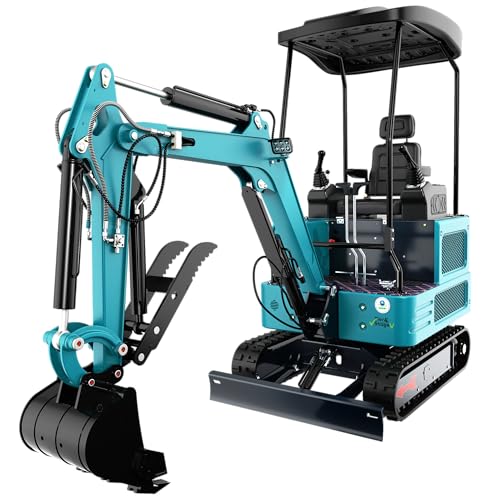
The MACHPRO unit uses Genuine Kubota Z482 power in a true 2-ton class chassis, offering reinforced chassis, full hydraulic pilot control, and a compact footprint suitable for professional jobsites. It emphasizes stability and smoother control for trenching and lifting.
Best for: contractors needing a stable, budget-conscious 2-ton option with reliable Kubota power.
Limitation: the 2-ton claim may imply a heavier footprint; access to parts and service should be considered in remote locations.
DS-16, 1.4 Ton KubotaDiesel Mini Excavator
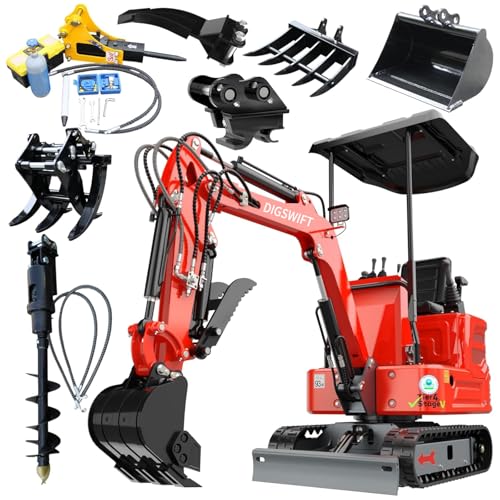
The DS-16 offers a 12 HP diesel engine with pilot control, a low-pressure oil circuit for precise valve operation, and a compact build suited for narrow spaces. It supports a variety of attachments and emphasizes easy handling in delicate landscaping and household tasks.
Best for: buyers prioritizing precision control and space efficiency for home projects or confined sites.
Limitation: smaller engine power means less endurance for heavy-duty trenching or long-duration use.
Nakkaa Small Excavator Ripper Accessory

A dedicated ripper attachment designed to fit 1–1.5 ton mini excavators, built from strong steel for ground-breaking tasks. The span and hole diameters suit a wide range of mini rigs, offering a robust option for tough soils and landscaping work.
Best for: owners who need a ground-breaking tool to augment digging and break through compact soils.
Limitation: compatibility depends on your specific machine’s mounting system and pin configuration.
MMS 1 Ton Mini Excavator with Wheels

The MS10L wheeled mini excavator offers mobility without tracks, featuring a 13.5 HP RATO engine and a maximum travel speed suitable for quick site-to-site movement. Its wheel design reduces ground damage on finished surfaces and makes relocation faster.
Best for: homeowners or small crews who require fast repositioning between tasks and less soil disturbance on paved surfaces.
Limitation: wheels can be less stable on uneven terrain compared to tracked models.
Buying Guide: Key Purchase Considerations
Engine choice matters for fuel efficiency, maintenance, and available power. Diesel engines deliver steady torque for longer tasks; gasoline engines may be easier to service in small shops. Consider fuel availability at your site and preferred fuel type.
Swing and control features help in confined spaces. Side swing booms reduce the need to reposition the unit, improving efficiency in tight yards and near walls. Pilot controls typically offer smoother operation than mechanical controls.
Attachment compatibility expands versatility. Look for machines that support hydraulic thumbs, clamps, augers, ripper teeth, and quick couplers for changing tools quickly.
Weight class and stability impact performance on uneven ground. A true 2-ton class often provides more digging depth and stability for trenching, but check ground clearance and wheel/track options for site conditions.
Delivery, service, and parts availability affect uptime. Machines with US-based stock or accessible parts networks help minimize downtime on remote sites.
FAQ
- What size mini excavator should I choose for tight spaces? Choose 1.4–1.7 ton models with side swing booms for the best maneuverability in confined areas.
- Is diesel or gasoline better for small excavators? Diesel engines typically offer better torque and fuel efficiency for longer tasks; gasoline engines can be simpler to service and start in mild conditions.
- Do I need a hydraulic thumb for landscaping? A hydraulic thumb can enhance material handling and precision when moving rocks, logs, or heavy debris, especially on small sites.
- What attachments should I consider? Attachments like thumbs, grapples, augers, and trenching blades expand capabilities; ensure the machine supports quick-coupler options.
- Are wheeled mini excavators as capable as tracked ones? Wheeled models are more mobile on finished surfaces and can travel faster, but tracked machines offer better stability and traction on soft or uneven ground.
- How important is delivery and setup? Providers offering included delivery and unloading can reduce setup time and allow immediate use upon arrival.