
When choosing a portable power station around 400 watts, balance capacity, charging options, and safety features is key for reliable off-grid use, camping, or backup power at home. The following picks emphasize compact yet capable units with pure sine wave AC outputs, multiple ports, and durable LiFePO4 or high-quality lithium batteries. This guide highlights five options that align with a 400W performance profile and practical everyday needs.
Summary of Chosen Products
| Product | Brand | Capacity | Key Features |
|---|---|---|---|
| EGO Power+ Portable Inverter | EGO Power+ | 400W continuous | Pure Sine Wave, USB-C, PD, quiet, compact |
| UDPOWER C400 Portable Power Station | UDPOWER | 256Wh | 400W output, LiFePO4, PD USB-C, multiple ports |
| UDPOWER C400 Solar Generator Kit | UDPOWER | 256Wh | Solar panel included, 400W peak, long cycle life |
| GrnOas.E 294Wh 400W Portable Power Station | GrnOas.E | 294Wh | 400W surge, long-life LiFePO4, multiple outputs, LCD |
| GrnOas.E 294Wh 400W Backup Power (Second Variant) | GrnOas.E | 294Wh | Long-lasting cycle life, LCD display, 9-device capacity |
Below are detailed product sections with features and practical considerations to help compare performance, portability, and long-term value. All sections include direct links to the Amazon product pages for quick reference.
EGO POWER+ Portable Inverter 400W

The EGO Power+ portable inverter delivers 400W of continuous power with an 800W peak, suitable for running a small appliance or charging multiple devices. It provides clean Pure Sine Wave output to protect sensitive electronics. The unit supports multiple USB charging options, including USB-C, PD, and USB-A ports, allowing simultaneous charging of phones, tablets, and small devices. Its compact form and low noise make it suitable for camping, job sites, or light emergency use. The product emphasizes portability and quiet operation as a key advantage for everyday use.
UDPOWER C400 Portable Power Station

The UDPOWER C400 offers 256Wh LiFePO4 storage with 400W continuous output and 800W surge capability. Its LiFePO4 chemistry supports a higher cycles life and safer operation in varying climates. The unit provides PD USB-C and multiple USB ports, enabling fast charging for laptops, cameras, and phones. It is designed for camping, CPAP use, or as a compact backup power source for small appliances. Its emphasis on safety and longevity makes it a practical choice for regular outdoor use.
UDPOWER C400 Solar Generator Kit

This kit pairs a 256Wh LiFePO4 battery with a 400W output and an included foldable solar panel. It supports 800W surge capacity and is designed for off-grid camping, RV trips, or emergency backup. The solar panel enables recharging in outdoor settings, enhancing portability for extended use. The system focuses on durability and energy efficiency, with a lifecycle-focused battery design suitable for frequent use and charging in outdoor environments.
GrnOas.E 294Wh Portable Power Station

The GrnOas.E 294Wh unit is built around a 400W peak capability with pure sine wave output for sensitive electronics. It supports multiple devices through USB ports, including PD fast charging, and dual AC outlets. The unit includes a large LCD display to monitor charge and discharge status and total power usage. Its design emphasizes durability and easy readability, making it a practical option for short trips or as a compact home backup for devices like routers, modems, or small appliances during outages.
Flashfish 200W Portable Power Station
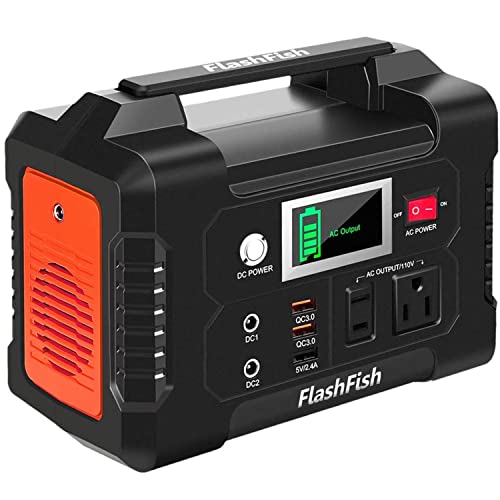
Note: While the Flashfish model listed here is rated for 200W continuous, a brief comparison is included to help contrast 400W class devices. It offers a mix of AC, DC, and USB outputs with a compact design and light weight. For users focusing strictly on near-400W performance, this option is lighter and more affordable but lacks the higher continuous power of true 400W units. It remains suitable for charging phones, tablets, cameras, and LED lighting in outdoor settings or as a basic emergency backup.
Buying Guide: Key Purchase Considerations
When evaluating 400W portable power stations, consider the following factors to ensure the unit fits your needs:
- Power output vs. surge: A 400W continuous rating is suitable for small appliances; check the surge rating to handle startup spikes from devices like fridges or power tools.
- Battery chemistry and cycle life: LiFePO4 batteries offer longer life and stability at higher temperatures, which contributes to longevity across thousands of charge cycles.
- Port configuration: Look for a variety of outputs (AC, USB-C PD, USB-A, DC) to support laptops, phones, lights, and CPAP machines.
- Recharging options: Optional solar charging improves grid independence. Confirm solar panel compatibility, charging speed, and whether solar panels come bundled.
- Weight and portability: If you plan to hike or camp, lighter models with ergonomic handles are advantageous, but ensure capacity meets your expected use.
- Display and usability: An LCD display that shows remaining capacity, input/output power, and charging status helps manage power usage effectively.
- Safety features: Look for protections like short-circuit, overcharge, deep discharge, and temperature regulation, especially for off-grid use.
- Repairability and warranty: Longer warranties and easier battery replacement improve long-term value for heavy users.
In practice, the best choice depends on your primary needs: extended off-grid camping, home backup for essential devices, or portable power for CPAP machines and laptops. Units with LiFePO4 chemistry and a robust mix of outputs typically deliver the broadest reliability across varied scenarios. For solar-enabled setups, ensure your solar panel and panel-to-pack charging compatibility to minimize downtime and maximize usable power.