
The right 220V power inverter converts 12V vehicle or battery DC power into stable 220V AC electricity, enabling access to household-grade outlets for laptops, tools, and small appliances on the road or off the grid. This guide highlights five top options that balance continuous power, peak surge, and safety features. Each entry includes a concise overview, key specs, and how it fits common needs—from RV adventures to emergency backup. Read on to compare performance, protections, and usability across popular 220V inverters.
| Product | Rated Continuous Power | Peak Power | Key Feature |
|---|---|---|---|
| High-Power 4000W DC to AC Power Inverter | 4000W | ≤8000W | Dual USB Ports, LED Display |
| Keenso 200W Car Power Inverter | 200W | – | 4 USB Ports, Cooling Fan |
| Surakey Car Power Inverter 3000W | 3000W | – | Multiple Protections |
| BELTTT 2000W Pure Sine Wave Inverter | 2000W | 4000W | Dual AC Sockets, 5V USB |
| LANDERPOW 3000W Pure Sine Wave Inverter | 3000W | 6000W | 3 AC Outlets, USB-C |
Note: All products convert DC from batteries or vehicles to mains voltage AC and are designed for RVs, cars, boats, and off-grid systems. When selecting an inverter, consider continuous power for running devices, surge capacity for startup loads, efficiency, cooling, and protective features to prevent battery drain or equipment damage.
High-Power 4000W Inverter With USB and LED Display

This 4000W peak, 12V DC to 110V/220V AC inverter suits heavy-duty use in cars, trucks, RVs, boats, and home backup scenarios. It features dual USB ports for fast charging and a bright LED display that shows voltage, wattage, and battery level. The combination of high capacity and real-time monitoring helps manage powerful appliances and tools without guesswork. The unit’s design prioritizes reliable performance in mobile environments where power stability is essential.
Keenso 200W Car Inverter With Four USB Ports
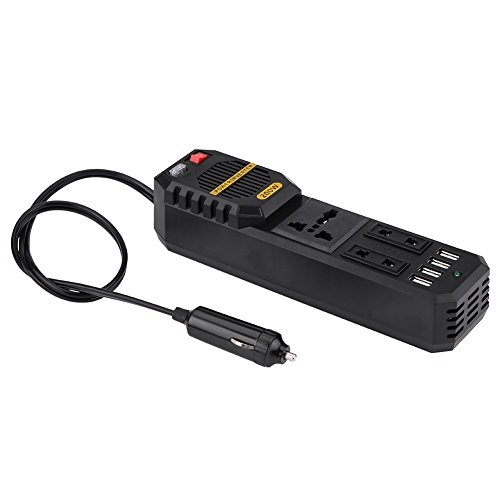
With 200W continuous power, this inverter provides DC 12V to AC 220V conversion for common household devices, along with 4 USB ports and a configurable USB-C option. It includes a built-in cooling fan to manage heat during extended use and keep noise levels low. Designed for broad vehicle compatibility, it’s a practical choice for charging laptops, tablets, phones, and small electronics while on the road or at the campsite.
Surakey 3000W Inverter With USB and Protection

This 3000W DC 12V to 220V inverter emphasizes safety with multiple protections, including overheat, high/low voltage, overload, and short-circuit safeguards. Equipped with a standard AC outlet and USB charging, it supports laptops, tablets, cameras, and other electronics, making it suitable for road trips and on-site work where reliable power is required. Its intelligent design helps maintain battery health while delivering steady AC power for demanding loads.
BELTTT 2000W Pure Sine Wave Inverter

Delivering 2000W continuous power with peak up to 4000W, this pure sine wave inverter ensures clean AC output compatible with sensitive electronics. It provides dual AC outlets and a 5V USB port for charging devices. Features include a real-time LCD display and built-in protections to guard against reverse polarity, over-voltage, and overload. It’s designed for RVs, trucks, and off-grid setups where steady, grid-like power improves equipment longevity.
LANDERPOW 3000W Pure Sine Wave Inverter

Equipped with 3000W continuous power and up to 6000W surge, this pure sine wave inverter supports RVs, trucks, solar setups, and off-grid homes. It includes three AC outlets and a USB-C port for fast charging, plus a remote control for convenient operation. The unit emphasizes efficiency and safe startup for heavy loads like microwaves or power tools, while its protective features help minimize electrical noise and battery drain in mobile environments.
Buying Guide: Key Considerations When Choosing a 220V Inverter
- Continuous vs. peak power: Match the inverter’s continuous rating to your typical load, and ensure its surge capacity covers startup demands for motors and compressors.
- Waveform type: For sensitive electronics, a pure sine wave inverter minimizes flicker and interference, improving compatibility with laptops, TVs, and audio equipment.
- Efficiency: Higher efficiency reduces wasted energy and battery drain—important for long trips or off-grid use.
- Cooling and reliability: Look for built-in fans or smart cooling, especially for high-wattage units operating for extended periods.
- Protection features: Overload, over/under voltage, short circuit, and reverse polarity protections help prevent damage to devices and batteries.
- Connectivity: USB ports (including USB-C) add versatility for charging mobile devices alongside AC outlets.
- Installation and safety: Proper wiring, fuse requirements, and compliance with local electrical codes are essential for safe operation.
- Physical design: Durable housings, noise levels, and mounting options influence usability in vehicles and campsites.
- Interference: Some inverters include filtering to reduce electromagnetic interference with radios, audio equipment, or other electronics.
Performance Perspectives
When selecting among 220V inverters, consider how you plan to use the unit. A higher continuous power rating is valuable for running refrigerators, power tools, or CPAP machines, while a strong surge rating ensures successful startup of appliances with high inrush currents. If electronics safety is a priority, opt for a pure sine wave model with robust protections and an informative display for monitoring battery health. For casual travel and charging, compact units with multiple USB ports offer practicality without excessive weight or space needs.
Usage Scenarios
RV travelers may benefit from a 3000W or greater pure sine wave inverter to operate microwaves, coffee makers, and TVs. Off-grid campers can pair a 12V or 24V battery bank with a high-efficiency inverter to power lights, fans, laptops, and small appliances. Vehicle use, such as trucks and vans, often requires units with better cooling and integrated outlets for on-the-road work, while boats may demand splash resistance and steady performance under varying loads.