
Choosing a powerful 2000W power station involves balancing surge capacity, battery chemistry, recharge speed, and portability. The following picks emphasize high-output reliability, LiFePO4 longevity, and practical features for home backup, RV trips, or camping. Each product is evaluated for its ability to run common high-wattage appliances, provide emergency UPS protection, and recharge quickly from AC or solar inputs.
| Product | Brand | Battery | Capacity (Wh) | Key Feature |
|---|---|---|---|---|
| Anker SOLIX C1000 Gen 2 | Anker | LiFePO4 | 1,024 | UltraFast 49 min recharge; 2,000W continuous |
| OUPES Mega 1 | OUPES | LiFePO4 | 1,024 | 2000W AC output; expandable to 5kWh |
| GRECELL 999Wh Solar Generator | GRECELL | LiFePO4 | 999 | Multiple ports; surge 2000W |
| OUPES Mega 1 Solar Kit | OUPES | LiFePO4 | 1,024 | UPS capability; solar charging option |
| Jackery HomePower 3000 | Jackery | LiFePO4 | 3,072 | High capacity backup with UPS |
Anker SOLIX C1000 Gen 2 Portable Power Station

The Anker SOLIX C1000 Gen 2 is a compact power station built around a 1,024Wh LiFePO4 battery. It delivers up to 2,000W continuous output with a 3,000W surge, supporting many home devices, refrigerators, and CPAP machines during outages. A notable feature is UltraFast recharging: 1,600W input for faster returns to full power, controlled via the Anker app. The unit is designed for portability, with size and weight reductions compared with similar models, making it suitable for both home backup and on-the-go use. It supports multiple ports for diverse device charging and can operate from solar inputs when paired with a panel.
OUPES Mega 1 Portable Power Station
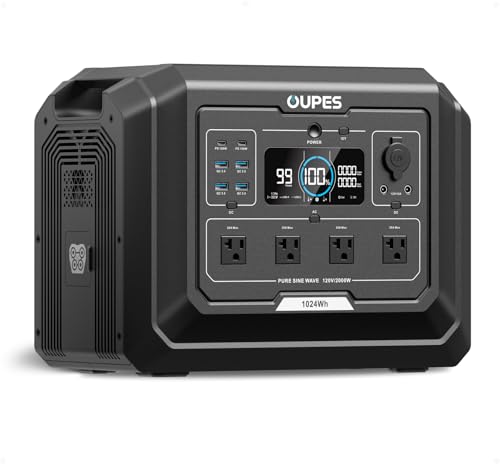
The OUPES Mega 1 offers 1,024Wh of LiFePO4 capacity with a robust 2,000W continuous AC output and 4,500W peak. This model is designed for high-wattage appliances like refrigerators and CPAP machines, making it a strong choice for home backup. A key advantage is expandability: optional extra batteries can scale capacity to 5,120Wh, enabling longer off-grid runs. Dual charging speeds allow 0-80% in about 36 minutes, balancing speed and battery longevity. The Mega 1 is suited for families seeking dependable power during outages or extended outdoor trips.
Anker SOLIX C1000 Gen 2 With Solar Panel

This variant blends the C1000 Gen 2 power station with a compact 200W solar panel for all-off-grid charging. In addition to the same rapid 49-minute recharge capability and 2,000W continuous output, solar charging expands off-grid use, particularly when access to AC power is limited. The LiFePO4 chemistry provides long cycle life, ideal for recurring power needs. The solar option is well-suited for campers and off-grid enthusiasts who prioritize quiet, emissions-free charging.
GRECELL 999Wh Solar Generator

The GRECELL generator provides a compact 999Wh LiFePO4 battery with a robust 1,000W continuous output and 2,000W peak. It is designed for the outdoors and can power multiple electronics simultaneously thanks to a rich I/O lineup: AC outlets, USB-C PD, USB ports, and DC 12V options. A built-in battery management system helps prevent overloads and overheating, with cooling provided by dual fans. This unit targets users who want a balance of lighter weight and sufficient power for camping, travel, and emergency needs without overbuilding for smaller households.
OUPES 2000W Mega 1 Solar Generator Kit

The Mega 1 Solar Generator Kit bundles a 1,024Wh LiFePO4 power station with a 240W solar panel, enabling off-grid charging and reliable emergency backup. It provides 2,000W AC output and 4,500W peak, with expansion potential to 5,120Wh by adding batteries later. The kit is suitable for road trips, off-grid living, and power outages where solar access can be leveraged to maintain essential devices. The integrated UPS feature helps protect sensitive equipment during outages.
BLUETTI AC70 Portable Power Station

The BLUETTI AC70 provides a 768Wh battery with a 1,000W inverter—escalating to 2,000W peak for brief surges. It supports up to 500W of solar input for recharging and uses LiFePO4 chemistry for improved longevity. Its lighter footprint makes it a practical option for road trips or small households that require dependable backup without carrying a large heavy unit.
Buying Guide: Key Purchase Considerations
- Battery chemistry and cycle life: LiFePO4 cells offer longer lifespans and safer thermal performance than some other chemistries, which matters for frequent use and storage in varying climates.
- Continuous vs. peak power: Ensure the unit’s continuous wattage meets your daily loads, while peak (surge) capacity handles appliances with high startup draws like compressors or motors.
- Capacity vs. weight: Higher watt-hour ratings deliver longer runtimes but add weight. Balance capacity with portability for your use case (home backup vs. camping).
- Recharging options: Look for fast AC recharging, multiple USB-C PD ports, and solar charging compatibility. Consider how quickly you need to return to full power after an outage or during trips.
- UPS and pass-through: A built-in UPS can switch to battery power within milliseconds, keeping critical devices online. Pass-through charging enables using power while recharging.
- Expandability: Some models offer additional battery modules to scale capacity for longer outages or extended trips.
- Ports and usability: A mix of AC outlets, USB-A/C, and DC ports covers a wide range of devices. User interfaces, app controls, and battery indicators affect day-to-day ease of use.
- Durability and warranty: Consider rugged builds, heat management, and warranty terms—especially for frequent outdoor use or mobile setups.
When selecting a 2000W power station, identify which scenarios matter most: daily home backup, emergency power during storms, off-grid camping, or RV living. The options above cover a spectrum—from compact, fast-charging units to high-capacity systems with expansion potential. By weighing capacity, charge speed, and portability, you can pick a model that reliably powers essentials when you need them most.