
Answering the question how to rip hardwood efficiently with a 10″ table saw, this guide highlights the best blades for straight, flat, glue-ready edges. These selections emphasize durability, clean cuts, and compatibility with 5/8″ arbors. Ideal buyers include hobby woodworkers tackling hardwood panels, cabinet makers seeking glue-ready edges, and professionals prioritizing long blade life in demanding ripping tasks. Below is a quick summary table of the chosen blades to compare core traits at a glance.
| Product | Best For | Key Benefit |
|---|---|---|
| Freud LM75R010 | Heavy hardwood ripping | Premium TiCo carbide for long life |
| FOXBC 10-Inch Flat Tooth Ripping | Fast, clean roughing cuts | Thin kerf reduces resistance |
| CMT 201.024.10 | Hardwoods and plywood | Versatile for varied wood types |
| Freud LM74R010 | Glue-ready edges | TiCo Hi-Density carbide blend |
| Diablo D1024X | Finish-quality rip cuts | HiCoated Perma-SHIELD coating |
Freud LM75R010: 10″ Industrial Thin Kerf Glue Line Ripping Blade
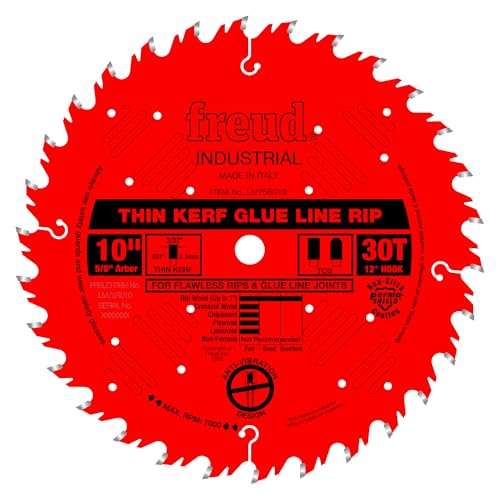
This blade is designed for demanding ripping of hardwood with a glue-ready finish. It uses a heavy-duty thick kerf and a reinforced plate to maintain flatness over long runs. The TiCo Hi-Density carbide ripping blend provides edge retention and consistent performance in tough woods. The 30-tooth configuration with a 12° hook angle supports steady cutting through dense hardwoods while keeping vibration manageable.
Best for: Professionals and serious hobbyists who rip large hardwood pieces and need maximum blade life and glue-line quality. Choose this if you prioritize a glue-ready edge and long-lasting performance in harsh wood species. Caution: The thicker kerf and heavier plate may demand more motor power and can slow through very soft woods compared to thinner kerf designs.
FOXBC 10-Inch Flat Tooth Ripping Blade

This 10-inch blade features flat-tooth geometry and a thin kerf of .094″, with a 5/8″ arbor. The 24-tooth design is optimized for fast, rough ripping with reduced resistance and vibration. High-density tungsten carbide provides toughness and wear resistance, supporting long blade life in routine hardwood ripping tasks. The flat-tooth pattern helps with smoother waste removal and a steadier cut on thick hardwoods.
Best for: Woodworkers who need quick stock removal and a smooth finish on rough rip cuts in hardwood. Better for: tasks where noise and vibration must be minimized. Caution: The 24 teeth may leave rougher surfaces on very fine finishing work; pair with a finishing blade for final pass.
CMT Orange Tools 201.024.10: Ripping Blade

This blade is positioned as an all-around ripping blade suitable for hardwoods, OSB, plywood, and softwoods. Its 10″ diameter and 5/8″ arbor fit common table saws. The product emphasizes compatibility with portable and stationary saws and is designed for rip cuts. The hardwood-focused design aims to deliver straight, true cuts with durable carbide teeth.
Best for: Mixed project shops that frequently rip different wood types and require dependable performance. Choose this if you want a versatile blade that handles hardwoods and plywood without swapping blades. Limitation: Information on exact tooth geometry is broad; consider pairing with a finish blade for best surfaces after ripping.
Freud Industrial Glue Line Ripping Blade LM74R010
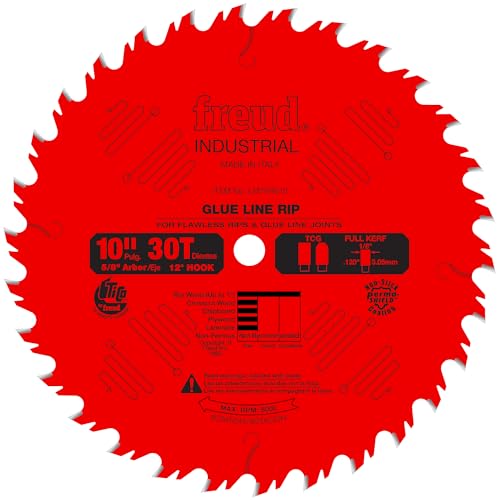
This blade features a premium TiCo Hi-Density carbide blend tailored for ripping performance. Its heavy-duty construction, thick kerf, and reinforced plate deliver maximum stability and flatness during demanding cutting. The triple-chip tooth design aims to produce exceptionally smooth, true cuts that are well-suited for glue-ready edges and finish work without excessive sanding or jointing.
Best for: Professionals who demand glue-ready edges and long blade life on tough hardwoods. Better for: users who need consistently flat, straight rips across large panels. Caution: The heavier blade profile may require slightly increased feed pressure and motor torque in softer woods.
CMT Orange Tools 256.050.10: Combination Ripping Blade

This blade is presented as a 15-degree ATB + 1 flat combination blade, designed for soft and hardwood, plywood, and veneers. It blends rip and crosscut capabilities with a geometry that supports broad application. The 10″ diameter and 5/8″ arbor mirror common shop setups, enabling compatibility across many saws and a range of wood types.
Best for: Shops needing a single blade that handles both ripping and crosscut tasks with reasonable finish. Choose this if you want a versatile blade that reduces blade changes. Limitation: The combination tooth design may not deliver the finest finish on highly figured hardwoods compared with dedicated finish blades.
Diablo Ripping Blade D1024X

Diablo’s D1024X ripping blade features HiCoated Perma-SHIELD coating to reduce heat buildup, gumming, and corrosion, enhancing longevity in tough ripping tasks. The TiCo Hi-Density carbide is engineered for clean, rip cuts through wood, plywood, and OSB, with a laser-cut, super-thin kerf designed for fast stock removal and reduced resistance. Its 24 ATB teeth balance efficiency and cut quality for hardwoods.
Best for: Users who want a coating that helps maintain blade efficiency and a consistent finish on gutsy hardwood ripping. Better for: reliable performance across varied woods with less heat buildup. Caution: The ATB tooth configuration may leave some crosscutting limitations compared to dedicated crosscut blades.
Buying Guide: 10 Inch Table Saw Blades For Ripping Hardwood
What should you consider when choosing a 10″ ripping blade for hardwood? Key factors include kerf thickness, tooth count, tooth geometry, carbide grade, and blade body stability. Heavier, thicker kerfs with tough bodies resist deflection in dense wood but need more power. Thin kerf blades reduce drag and may improve speed, but can wear faster if used on very hard species. TiCo or Hi-Density carbide blends extend edge life in tough hardwoods. For glue-line work, blades designed to produce clean glue-ready edges help minimize sanding later.
Tooth Geometry: Impact on Finish
Tri- or triple-chip designs can deliver smoother faces ideal for glue lines, while ATB or flat-tooth styles favor clean inside faces during ripping. For hardwoods, a blend that minimizes chipping and provides stable trenches helps glue lines pair well with subsequent finishing.
Durability and Stability
A reinforced plate and thick kerf blade resist deflection during heavy ripping. This stability translates into flatter stock surfaces and more consistent cuts across long runs. If you’re working with large, thick hardwood boards, prioritize blades with robust construction and carbide that resists wear.
Arbor Size and Compatibility
Most 10″ ripping blades use a 5/8″ arbor. Ensure your saw accepts this size and confirm whether you need a flat or flat-tooth design based on your saw’s motor power and typical material types.
Finishing Needs and Glue Lines
For glue-ready edges, select blades marketed for glue-line finishing or with carbide blends that reduce tear-out and produce smoother surfaces. Consider pairing a ripping blade with a separate finishing blade for the final surface quality when working hardwoods.
Budget and Overall Value
Invest in blades with durable carbide and reinforced bodies when you frequently cut dense hardwoods. While premium blades cost more upfront, their longer life and cleaner results can lower overall project time and material waste.
Frequently Asked Questions
- What blade is best for ripping hardwoods? A blade with a sturdy plate, TiCo or Hi-Density carbide, and appropriate kerf like 0.091″ or 0.094″ is suitable for stable, long cuts in hardwoods.
- Should I use a thin-kerf blade for ripping hardwood? Thin-kerf blades reduce resistance and are faster, but may wear faster in very dense woods. Use when your saw has enough power and you want quicker stock removal.
- Is a glue-line blade necessary for hardwood ripping? If glue-line quality is a priority and you will glue edges, a blade designed for glue-line finishes can help minimize sanding and achieve smoother surfaces.
- What blade feature helps prevent tear-out on hardwoods? A tooth design optimized for clean edges, carbide type, and a well-tinned coating can reduce tear-out. Some blades advertise anti-tear features or triple-chip tooth arrangements for smoother edges.
- How important is blade stability for long ripping runs? Very important. A blade with a reinforced plate and proper kerf maintains flatness, leading to straighter cuts and less drifting across thick boards.
- Can I use a crosscut blade for ripping hardwoods? Not ideal. A dedicated ripping or combination blade with appropriate geometry yields better stock removal and edge quality for ripping tasks.